
Key takeaways
- Regulates in both directions: retains warmth when cold, moves moisture when warm.
- Naturally fire resistant, so no chemical flame retardant is required.
- Pure chemical-free wool, in every mattress, every time.
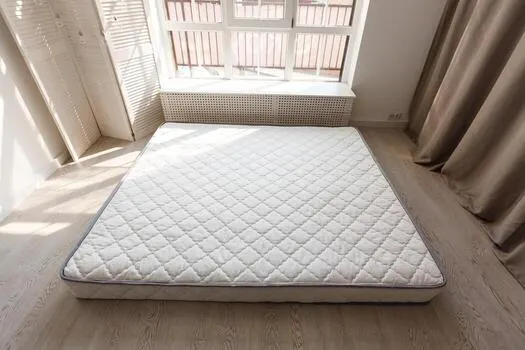
Wool regulates in both directions - it holds warmth when a room is cold and moves moisture away when it is warm. It also passes fire safety requirements without a chemical flame retardant, which is why it sits where it does.
Mattresses have to meet fire safety requirements. The conventional route is a chemical flame retardant - TDCPP, TCEP and PBDEs are the common ones, and manufacturers are not required to disclose which they used.
Wool meets the requirement on its own. Choosing it is what makes the disclosure question moot rather than something to answer carefully.
A sleeper loses moisture all night. Wool can absorb a substantial share of its own weight in moisture vapour and still feel dry to the touch, then release it as the room ventilates during the day.
That is the mechanism behind wool feeling temperate rather than warm or cool - it is managing humidity at the surface, not just insulating.